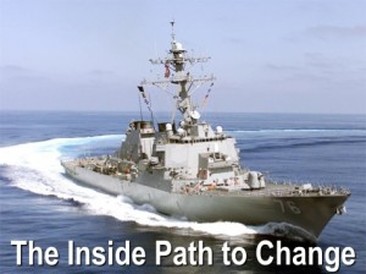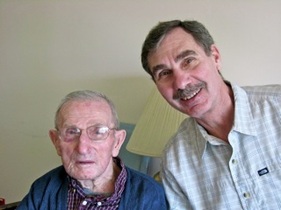
I recently reviewed a case study of a project of which I was a member of the development and delivery team. The project was designed for the US Navy Chaplain Corps at a time when they where in the midst of transformation, it was titled, Accelerating Change With Emotional Intelligence. What I didn't realize was that this project would have as much an affect on me as it did on our participants. In 1969 I graduated from college and within a few days received notification that I was required to report for my induction physical. The Vietnam War was still raging and every night the news was filled with body counts from both sides; it was a frightening and tumultuous time both for our country and for me. I was recently married and fortunate enough to have been accepted into grad school that Fall, but our country needed more and more bodies to fight the war and deferments had run out for me. Reporting for my physical, I boarded a bus in my hometown with about 30 other guys; a few were acquaintances from high school. We traveled a few hours to the induction site. The bus was very quiet; not much talk at all. Everyone was somber and seemed to be contemplating their future. Where will I be a month from now? we all wondered. We were commanded to get of the bus and line up. There had to be more than 300 boys, all there for the same reason. Guys in uniform were yelling and pushing us from one station to another. Much of the examination took place in large rooms. It was my first taste of military life. Under my arm I carried a large brown manila envelope that contained x-rays from three knee surgeries I had during my senior year of high school and first year of college, a result of playing football. Except for my knees I was in perfect health. Although my knees eventually forced me to quit playing football in college, I was still able to run and be athletic. I thought surgeries might disqualify me, but in 1969 the rumors were that only being disabled would keep you from passing. As I was standing in line I was approached by an aggressive man in uniform who yelled, “What’s in that envelope, boy!” Before I could answer he grabbed it out of my hand and left without a word. I wanted to protest, but it was obvious this was not the time or place to protest or put up a fuss; it could only lead to something I wasn’t ready to handle. My orders were simple and didn’t need to be verbalized: keep my mouth shut, follow the person in front of me and stay on the yellow line. Stop whenever I’m told and do whatever I’m commanded to do. At some point later in the day I was pulled out of line and told to report to an office at the far end of the room. I knocked on the door and a voice commanded me to come in. The person behind the desk said, “Sit down.” He asked me to identify myself and then told me to drop my pants! As I was unbuckling I noticed he had my x-rays on the desk. He then asked me to stand up on a stool, and as I did he looked at the surgical scars on both my knees. “Get down and pull your pants up. You’re through.” He put the x-rays back in the envelope and told me I was unfit for duty and to report to my station and wait for my bus to leave. I sat very still for about another hour before the contingent from my hometown finished the process. We boarded and headed home. About 30 minutes later it started to sink in. I wasn’t going to be drafted and in a few months I’d be attending classes instead of learning to survive in the jungle. I wanted to laugh and stand up and yell with relief, but didn’t because surely no one else on that bus was feeling as joyful. In fact, that ride home was one of the most difficult ninety minutes I have ever experienced in my life. It was obvious that I was the only person on that bus who knew what his fate would be. Everyone else was once again in deep contemplation. There were occasional laughs and remarks – “Can you believe what just happened?” “I’ve never been through anything like that in my life.” “Did you see that guy crying in the corner?” As soon as these words would leave someone’s lips, most knew more days like this waited ahead. The war came to an end a few years later. I graduated from grad school and took my first job; I was on my career path. Over the years I noticed that I would experience a sense of guilt and remorse about not being part of the war. I felt like I didn’t do my duty. I had escaped; I chickened out. I had hid while others took my place. In the mid-80s I moved to the Washington DC area and after work one evening I decided to visit the Vietnam War Memorial. I had heard so much about it – how it was a healing place for many. But for me it only deepened my sense of guilt about not having fulfilled my duty. I never let anyone in on these feelings and thoughts. They didn’t haunt me over the years, but they would certainly visit. And although I knew it hadn’t been my decision not to serve, that didn’t stop the guilt from returning. In 2003 I had the good fortune to work with 6 Seconds on a project for the US Navy and Marine Chaplains Corp. It was to develop a program to equip chaplains with the tools to be effective change agents. They are key influencers and resources to captains, commanders and the men and women who look to them for solace, guidance and forgiveness at sea and in battle. For over a year I worked with chaplains from Norfolk, VA to Okinawa, Japan. At first I didn’t realize why this program took on such significance for me until we presented the pilot program in Newport, RI. In the opening introductions I realized I now had my chance to redeem myself, to serve my country and to heal my wound. I would like to take this time to personally thank 6 Seconds and our team, and most of all the near-900 chaplains around the globe who invited me in and allowed me to share my story with them. We helped each other in ways that were much deeper and more important than how to become an effective agent for change and transformation. Every day they heal psychological and spiritual wounds and I’m very thankful to be one of the many they have touched. I invite you to read the case study of this project. It’s an excellent description and demonstration of how emotional intelligence can be applied to help organizations and change agents effectively implement and steward change and organizational transformation. Resources:Military chaplain: Marines in Iraq look to pastor for answers to tough questions, Christian Science Monitor ArticleMinistering to Soldiers, and Facing Their Struggles, NYTimes Article EQ: Case Study, 6Seconds
"Success means having the courage, the determination, and the will to become the person you believe you were meant to be." George Sheehan, MD The preceding quote from George Sheehan MD, a person who inspired me, and thousands of other runners, to achieve our best, also planted the seed that maybe if I trained hard enough I could qualify for the Boston Marathon. I still can feel the exhilaration on seeing the finishing clock as I crossed the line at the Marine Corps Marathon; I knew I had qualified for the 1982 Boston Marathon. I was beyond excited; Boston was the pinnacle of marathons in the 60’s thru the 80’s and I had achieved the right to be at the starting line with number 3451. My emotions were about to intensify even more; approximately a mile into the marathon I noticed Sheehan just ahead of me. I had no doubt that it was him: I had seen him run in a number of films and read his book, Running and Being, all of which had motivated me to start running. Sheehan’s running style was unique, but his breathing style was unmistakable. Huff and puff is a mild description of the steam engine locomotive sound he made as he ran. My recollection is that he was in his 70’s and I was 35 and I was soon to pass him. I thought for a moment, should I say something to him as I pass? When I pulled along side, I looked over and he looked back. I said, “Dr. Sheehan thank you, if it were not for you I would not be here today.” He smiled and wished me the best. I felt blessed by a sage who had been to the top of Mt. Olympus, and for a fleeting moment I thought I might just win this race! However, Alberto Salazar had other plans and a stronger finishing kick, beating me by a mere 52 minutes! Alberto broke a record that day, and I finished. He was determined and courageous and beat a rival by a mere 2 seconds, but he was no more determined and courageous than 5,000 thousand other runners that day, including yours truly. I also remember the day before the race. I was having breakfast at the hotel with a best friend and we started up a conversation with a guy sitting next to us. He said he lived for marathon day. He went on to say that 363 days of the year he’s a mailman, but on this one day he feels special, successful and the crowds treated him, as they do all the runners, as a hero. Isn’t this at the heart of George’s wisdom? “Success in life is the determination and courage to be whom you are meant to be.” In the mailman’s case it meant not only to be a marathon runner on this one day of the year, but to be a man who delivers birthday cards to other people’s three-year-old grandkids in every condition nature can throw at him. George Sheehan was a cardiologist. No doubt he repaired and saved many hearts. But George was meant to be a teacher; not the kind of teacher who stuffs you full of information, but in the true sense of the Latin word educere, he was able to bring forth the best in you. In his role as teacher, philosopher and runner he opened and touched the hearts and minds of thousands and helped to prevent the very disease he was trained to treat. I started running about the same time I assumed my first CEO position. I wasn’t sure if I was meant to be a leader and I knew I was never going to be a professional runner. However, running helped me discover what kind of leader I was meant to be. Running helped me experience a deeper and more intense level of determination and how to summon the courage to push through adversity and complete the goals I had set for myself. I also learned that there were aspects of leading that I was just not going to be good at. What I came to understand is that, like George, I was meant to be a leader who enjoyed creating organizations where Educere became the operating philosophy. Much later I learned that my core strengths include a love of learning, creativity and curiosity, which affirmed why I felt most comfortable, passionate and challenged in pursuing this brand and embracing this particular style of leadership. DeWitt Jones, in his film, Celebrate What’s Right With the World, offers a similar message and worldview. Finding out who you are and being able to see and celebrate abundance is a formula not just for success but also for significance. So don’t burden yourself with what you are not – Celebrate What’s Right For You. Celebrate the leader you are meant to be. When you do this, the people you serve will thrive also. Tips to “Being” a Successful Leader: Have an open and flexible mind: Rekindle the curiosity and drive you had as a child to explore, understand and learn. Become intimately connected with your strengths, and celebrate them by using them as often as you can. (See Resource below) Let others contribute their strengths; a team is the sum of its individual strengths and so is a leader. Celebrate, Celebrate, Celebrate: We devote an enormous amount of time and energy to dissecting our weaknesses and failures, and so little time celebrating what’s right. Don’t let yourself get stuck in a rut: Every day, find something that gives you relief, fun, health and inspiration. Run, paint, write, sing, play music, dance, read non-fiction, play with your kids like you are one of them. Resource: Log on to the Authentic Happiness Web Site and register to take the VIA Survey of Character Strengths
A recent study found that MBA's who have an optimistic mindset are significantly more successful in landing jobs, receiving recognition and getting promotions. Additional studies have found that optimism is also a trait and or characteristic of resilient and emotionally intelligent people. In today's turbulent world where continuous change, daily stress and adversity are ever present, optimism is critical to living a healthy and productive life. It's importance in leadership is also paramount. The ability to successfully navigate a highly competitive global marketplace requires leaders to be realistically optimistic. Skepticism is important and healthy, but it must be tempered with optimism to see opportunities and to energize a workforce to pursue and capitalize on the opportunity. The following is a mindset frame that you can use to assess if you are perceiving a circumstance through an optimistic or pessimistic pair of glasses. If you notice that you are feeling powerless because the situation appears permanent and it has infected all aspects of your life, you have a pair of pessimistic glasses on. It's call the Permanent, Pervasive and Powerless view. But the reality is that most situations aren't this way. Most difficulties and adversities are Temporary, Isolated and Effort Possible. This is the TIE approach. This mindset and worldview keeps you energized, focused and feeling OPTIMISTIC. Try it out; put the TIE glasses on and re-assess your situation. It may take some practice, but the effort will be rewarding, and it just might get you that job or promotion you've been after.
I have been a witness to the power of Resiliency that is imprinted in our genes. It was not an experience that I chose, although I feel privileged - life has a way of making choices that we must accept. Days ago my Father reached a point in his 92nd year in which his physical, mental and emotional resiliency needed to sustain his life were no longer strong enough for him to win the fight.
He had made it clear that he wanted to survive only if he had the resiliency to do it on his own. He had always been self-reliant; he didn’t want artificial resiliency imposed on him at the end.
My Father encountered and overcame many adversities in his life. He married just before leaving for Africa in World War II. Shortly after he arrived his wife died accidentally. He was not permitted to return home from the war for her funeral. Before the War life was difficult. He was part of a large immigrant family, 9 children in total, that struggled to make a home in the United States. He was nine years old when the Great Depression hit. He helped his family manage during this crisis until he was inducted into the Army when he was 22. He survived the War and the deaths of his parents and three brothers. After the War he married my Mother and they both worked hard to provide a comfortable life for my sister and me. My Dad was never one to complain and always worked a second job on weekends. I can’t recall him ever being sick or missing a day of work. In fact, he continued to work part-time at a local country club where he caddied as an adolescent until he was 89. I remember him telling me that he didn’t think he was going to work that spring and summer at the club; almost apologizing for his decision to finally retire. That year the club gave him a lifetime membership.
I know that he and my Mom had difficult times during their relationship, but they both worked to not have their problems become our problems. He was committed and devoted to his family. My Mom experienced a number of serious health problems. She was diagnosed with lymphoma and went through a course of chemotherapy. She later had a series of cardiovascular problems that required surgeries. Throughout all her health difficulties my Dad remained at her side and optimistic.
My Mom died eleven years ago during open-heart surgery. She was kept alive with machines for a few days hoping that her heart would recover and take over – it didn’t. Dad had to make the decision to let her pass. I know he was deeply pained, as we all were by this experience. After Mom’s death, Dad lived on his own, frequently visiting her grave to leave flowers.
He kept active playing golf, attending church and mowing the fairways at his country club. After being away for many years I had the opportunity to move back into the. We became good buddies. We bought season tickets to UCONN football and enjoyed our tailgate lunches before each game. He enjoyed visiting our home, making friends with our neighbors and taking trips over the holidays to see his granddaughters and great grandchildren.
He no longer takes in food or liquids; he does not speak – it’s only a matter of time before his body will shut down. I know there is no going back and I know that this is his choice. It’s not easy watching the ebb and flow of his breathing – there are times when his chest stops. I place my hand on his chest wanting him to breathe and at the same time to not suffer. After a short time he takes in another breath and so do I.
The nurse listens to his heart and lungs and marvels at how strong it is. He has a resilient heart. Even under these extreme conditions it keeps beating. His heart always pursued life and now it is carrying him to the precipice of death.
I realized that when resiliency flourishes in one’s life – there is no giving in or up. This man never did, why should his heart? It knew only one way; it had only one choice; it must go through a process of using up every last resilient beat.
I just knew that his chest wouldn’t rise again. After three days of knowing, I still wasn’t prepared. My hand and his chest were motionless. My heart was desperately reaching for its resiliency.
The power of resiliency is astounding and positive and yet there is a hardness to it. The process of overcoming and transforming adversity in one’s life is not easy or pleasant and sometimes can be painful. Resiliency doesn’t promise an easy road it; only promises to take you down that road as far as you want to go.
My Dad came to that point in his journey. I know it was easier for him to accept than it is for me. What I will remember most is the twinkle in his blue eyes, his loyalty and his resilient heart.
The Seven Rituals of Renewal ™ are behavior choices that will change your life, and by incorporating these Rituals into your day you will notice a decrease in your stress level, which will give you more energy, focus, and a positive outlook. You might be saying to yourself, “I’m already to busy; I can’t fit one more thing into my day!” Well, what’s the alternative? Is it to continue your day of “hurry and worry” and eventually wear yourself down to the point where you don’t have the physical, mental and emotional energy to enjoy life! Recent studies indicate that most people waste about 2.9 hours a day. The healthy and resilient alternative to “hurry and worry” is to build a practice of these Seven Rituals. There is one practice for each letter of the word renewal, and the beauty of this practice is that all seven will take about 60 minutes, which you can schedule throughout the day, and still have 1.9 hours to waste!
The Alchemy of the Seven Rituals of Renewal is that each one has the capacity to have a positive affect on your body chemistry, which in turn has a beneficial impact on your mental, emotional and physical being. When you practice the A of Appreciation you will stimulate the production of a hormone called oxytocin, which has a mitigating effect on the stress hormones, particularly cortisol. Oxytocin can reduce hyper-vigilance, which cortisol is responsible for, and give you a sense of calmness.
Seven Rituals of Renewal™
R: Take 10-15 minutes each day to Reflect. No special topic or requirements other than to turn off all electronic gear, sit quite without any interruptions. Take yourself off the grid; be quite and reflect.
E: Get some Exercise everyday. This doesn’t have to be at a fitness center; just do something that gets your body moving e.g. park your car a distance form your office, take a short walk during lunch, or take the stairs instead of the elevator. 10 minutes is great. This is not a weight reduction and muscle building routine; its about getting oxygen into you body and brain.
N: Select and eat one thing that is Nutritious everyday; select a piece of fruit or unsalted almonds instead of chips or candy. You’ll feel good about your decision and they’re good for you! Many people report that they don’t eat breakfast or take lunch; use this ritual as a healthy snack in the morning or mid-afternoon.
E: Engage with someone you love every day. It’s best face to face, but phone or one of those video phone services will suffice occasionally; make sure the engagement is about the love not about a TV program. Call a child or grandchild; your goal is to feel the love! Once again take yourself off the grid.
W: Take time to experience some Wackiness in you day. Find something that will give you a good round of laughter, the more the better. It’s not as hard as you might think. Just think about laughing and you might crack a smile and begin to laugh. You actually may find yourself laughing about nothing and enjoying it! However, the absolute best is whenever you are in the company of young kids and they start laughing about something goofy, just let yourself enjoy and join in!
A: Spend a moment in Appreciation. Think about all that you have to appreciate. Each day find something in your life that deserves your appreciation. I know, when we’re stressed we only notice what’s stressing us, and that’s exactly why you need to stop and appreciate that you have oxygen to breathe!
L: is for Letting Go. It’s amazing how much negative stuff we acquire from the time we get up in the morning to the time we retire. Anger, regrets, disappointments are just a few. Forgive, forget and move-on. There are so many more important things to use our limited energy on. There is a saying, “It’s not worth sticky palettes!” You know, the things in our blood that get thick and stick together when were stressed.
The amazing thing about each of these rituals is that each one has the power to change your entire being and when you incorporate al seven on daily basis they can change your life. The decision is yours, continue the hurry – worry game and reduce your health, effectiveness and joy in work and life or start right now to practice the Seven Rituals of Renewal™ and experience the best of you.
The Renewal Group can assist you in changing your life with our four one-hour Seven Rituals of Renewal coaching program. Our commitment and belief is that this program will improve your well-being, and continued daily practice will have a significant benefit to your health and satisfaction with life and work.
Stress is a form of terrorism that infiltrates and attacks our hearts and minds and the effectiveness of our organizations. It’s an assassin waiting to strike at our Resiliency. Unfortunately the full significance and seriousness of stress is misunderstood and under valued. We use the word indiscriminately, and can’t seem to connect the dots. We stress equally over the inconvenience of a hangnail, and the fear of a global financial meltdown. And like the terror attacks we can’t seem to connect the dots until we suffer a major setback, such as a heart attack. As our lives have become increasing complicated, our ability to assign an appropriate level of threat to a stressor has decreased, leaving us increasingly vulnerable.
Since it’s inception the Advisory Threat System has been at yellow and above, and our lives and organizations have been in lock step with the system. We cannot solve the issues of Homeland Security, although it might be healthy for our country to be continuously at yellow or above, it is not sustainable to live our lives’ at an elevated level of stress. If we consciously and or unconsciously continue to live at yellow or above we have become our worst fears – we are the terrorists. Stress is a Disease: We cannot rid our lives and organizations of stress; in fact, we need certain levels of stress to be productive. We need to educate ourselves about the different types of stress, acute and chronic, and learn ways of managing both types to prevent our lives and organizations from becoming drained of vitality, creativity, and the resiliency required to be effective and successful in these stressful times. Stress is a bio-psycho-social-spiritual disease that is a major contributing factor to increased healthcare utilization and costs, illness and disease and lost productivity: personally, professionally, organizationally and nationally. The following points highlight the enormity of the problem and its costs: * Princeton Survey Research study, three-quarters of employees believe that there is more on-the-job stress than a generation ago.
* A Northwestern National Life study found that one in four employees viewed their jobs as the No. 1 source of stress in their lives.
* Gallup reports 80 percent of employees suffer from job stress with nearly 40 percent reporting that they need help in managing their stress.
* Job stress costs American businesses hundreds of billions of dollars a year in employee burnout, turnover, higher absenteeism, lower production and increased health care costs.
* The American Psychological Association estimates that 60 percent of all absences are due to stress-related issues, costing U.S. companies more than $57 billion a year.
* Heart disease is the second largest killer next to cancer. It is estimated that some 80 million Americans exhibit some of the symptoms that will lead to heart disease. The six contributing factors to heart disease are Diet, Exercise, Stress/Sleep, Lifestyle and The Environment. A recent study found that women with stressful jobs have a 40% higher risk of major coronary problems than women with less job strain.
Our current worrisome and stressful social and economic climate is compounding the risks to our health and performance; just worrying about losing a job can increase your coronary risks. These findings should be a call to raise the national Stress Threat Level to RED; alerting leaders to the dangers stress poses to their ability to reduce costs, increase productivity, and remain competitive. A stressful organizational climate is a petri dish for breeding illness, accidents, disengaged employees, inferior customer service, and unproductive team and organizational behavior. And like many infectious diseases it is pervasive and has no boundaries. It is a factor in poor school performance, abusive and violent behavior, and relationship discord. Stress and the Brain: The Amydala is our 911 Call Center
Stress is personal. How one interprets a situation, will determine how they feel and how they react; yet, our brains stress response mechanism is basically identical. The paradox of stress is that the parts of our brain responsible for igniting the stress response, by releasing the stress hormones adrenalin and cortisol, and driving emotions such as fear, the amydalae, think they are doing us a service! And when we need to take immediate action to avoid a threat it does; however, there is a down side.
Our brain’s stress response mechanism is designed to handle acute stress. These stressors are usually perceived as immediate threats to our physical, psychological, and emotional well-being, and they are time limited. An example of an acute stressor is what you might experience when an 18-wheeler wants your lane, and doesn’t ask for permission to take it – Stress Level RED! If you’ve been in this situation or can imagine it, you may have noticed an increase in your heart rate, and a few other physical and emotional changes; the critical factor is that it provides you with the focus, energy, and ability to immediately blow your horn, and move into the breakdown lane. This almost instantaneous response, sometimes referred to as Hijacking, allowed you to survive this threat! Within a few minutes your body begins to return to “normal”, but your eyes and ears stay finely attuned to all the other 18-wheeler threats still on the road. When you encounter the next 18-wheeler you may notice a bit of tension until you are safely back into your lane. Your amydalae will remain hyper-vigilant (Level Yellow) scanning for all additional potential threats, as well as retain this stressful incident for future reference. And this is the problem – we remain on hyper-vigilant mode. We are constantly at threat levels yellow, orange, or red, which cause us to exaggerate every other stressor we encounter.
In stressful work climates, employees are on constant alert, which reduces their creativity, increases tension, frustration and fatigue - adding a negative overlay to all situations, which increases the chances of numerous Amygdala Hijackings.
In today’s uncertain and turbulent times we are experiencing numerous acute stressors, “My computer won’t boot as fast as I want it to.” compounded and complicated with chronic stress. The difference is that chronic stress is stress we experience over a prolonged period, and our perception is that we have minimal or no control over it, e.g. an unsatisfactory job or a stressful work climate. Chronic Stress creates a constant level of strain, which has an eroding and corroding effect on our well-being and performance. This is double trouble; the combination of chronic and acute stress reduces and constricts our personal, professional and organizational health and effectiveness. Stop Acute Stressors from becoming Chronic:
In most cases an acute stressor will come to an end. Remaining optimistic and keeping things in perspective helps acute stressors dissipate and end in a timely manner. Be cautious not to convert an acute stressor into a chronic stressor. Here’s an example. During a meeting you perceive a colleague’s comments about a proposal you have made to be inappropriately sarcastic. You react rudely, you’re short and dismissive – maybe you even yell at the person. This exchange sets off the stress response in both of you. Hopefully, sooner than later, you recognize that you were Hijacked and your behavior was not productive for the relationship and the team. By offering an authentic apology for your reaction, you can begin to lower the threat level from yellow to blue or green, and bring the stressful situation to a conclusion. If you keep the threat level at yellow or above, you and your colleague may carry this stressful baggage into every other situation increasing the chances that another reaction will occur. What should have been an acute stressor can linger and turn into a chronic negative relationship, which doesn’t serve either of you well.This is not unusual, most people have stories similar to this situation, and it frequently happens when people carry stress home with them and respond to a loved one with their pent up stress from the workday.
Commit to Address your Chronic Stress: Chronic stressors require more thought and effort to deal with. If you’re in a job or relationship that is not meeting your expectations, it’s very hard to just quit and move on. You may need the job for income and health insurance. And although the relationship has features that are not meeting your needs, there may be many aspects that are. In both cases take time to reflect on want you want and then take action that provides you with a sense of moving towards a resolution. Take small steps and focus on aspects that you have control over. By taking small steps towards a resolution you will reduce your stress, feel more hopeful and will benefit from an increase in energy to address the problem more fully.
In the job scenario you can start looking for another job or explore how you may move within your organization to another position that better meets your interests and strengths. In both situations outside assistance or counseling from a friend, mentor or professional can help you find perspective and suggest a process that will help to move the job and the relationship situations in a positive direction.
Three Steps that are helpful in Addressing Chronic Stress:
* Take time to reflect on the situation. What is it that you want? Be as clear as possible. * Ask yourself, “What am I contributing to the situation?” and commit to changing your behavior first. * Most Chronic stressors require a process of taking small steps. Identify pro-active, positive steps that you can take. Be patient, but be active in the process of moving in the direction of a resolution.
If you chose not to address your personal and organizational chronic and acute stress you are risking your health, performance and satisfaction with work and life. Most of all, you are eroding your resiliency at a time when everyone needs his or her resiliency to be at its peak. However, the dangers of untreated stress are far more significant than one might realize.
Stress s a symptom and a transmission factor to a communicable disease that is preventing individuals and organizations from achieving their highest potential; we call it Chronic Human Wasting Disease™. CHMW is an infectious disease that strikes at the heart of individual, team and organizational performance. It subverts and steals the essence of human and organizational effectiveness and success – intrinsic motivation and potential. If CHWD is not treated, it will eventually destroy what you need and value most, your human resources and their potential. The Renewal Group is your source for preventing and treating the causes and consequences of stress, which is one important step in preventing Chronic Human Wasting Disease™. If you believe that people are your most important asset, and if you are committed to achieving a healthy and effective organization where people thrive and their potential and performance flourishes contact us for a consultation.
“The brain is lazy. It changes only when it has to. And the conditions that consistently force the brain to rewire itself are when it confronts something novel.” This unflattering statement about our brains comes from the book, Iconoclast, by Gregory Berns, a neuroscientist. Recently my lazy brain got energized when I was listening to a radio series titled, No Place Like Home, on Bob Edward’s Weekend. What got its (my) attention was that it isn’t only novelty that opens our brains up to rewiring; it’s also adversity.
This radio series was about the aftermath of Katrina and how the city is rewiring itself to move forward with even greater resiliency. Tim Williamson, co-founder and CEO of The Idea Village was discussing his organization’s mission to help identify and support local entrepreneurs to build a varied and thriving business climate in New Orleans. Tim was asked, “New Orleans has its ways – is it open to new ideas?” His response was a textbook description and metaphor of how brains work and the process of building resiliency on micro/individual and macro/community levels. His response and I’m paraphrasing, was that indeed, New Orleans was a city of closed networks and it was difficult for anyone or anything new to break-in or through. What Katrina (adversity) did was fracture these networks, providing the opportunity for new ideas and ways to take hold. This process was assisted by thousands of volunteers, celebrities, and outsiders (novelty) coming in with compassion and new ideas and ways of doing things. At a time of need the people and community of New Orleans was more open than at any other time.
We could all benefit from being more resilient than we are, particularly in these stressful times. One obstacle that prevents us from developing and strengthening our resiliency is that our brains: · Are lazy and like routine · Avoid discomfort · And thrives on familiarity and predictability
Our brain’s preferences can be traps to building and strengthening one’s resiliency. Most of what prevents us from being resilient is a set of hardwired brain patterns and habits that have developed over years. Berns says, “That novelty equals learning and learning means physical rewiring of the brain.” The same is true for adversity. When we experience adversity it is an OPPORTUNITY for learning. The question is, “Are you open to learning?” Are you curious enough to push your brain to explore or will you follow your brains preference for being a couch potato? The evidence is conclusive; our brains are capable of rewiring. There are amazing examples of stroke victims not accepting a victim’s role and rewiring their brains, with effort and perseverance, so that physical capacities initially lost were re-learned and rewired to other regions of the brain.
In another profile segment of, No Place Like Home, Paul Baricos of the Hollygrove Market and Farm shares an uplifting story of how one acre of urban land in the heart of New Orleans has become a thriving center of community where folks learn and share urban farming techniques. The center brings people together to learn, gain strength and courage in a community of common values.
In his description of how this came about he says, “The storm created an opportunity – it forced people to do it themselves. We had to go through a self-assessment. What kind of life do we want?” Once again you can see the process of confronting an adverse situation, learning from it and transforming it into an opportunity to be more self-sufficient and resilient.
These same principles, concepts and actions that the people of New Orleans are employing to rebuild a thriving and resilient city are the identical steps you can take personally, professionally, organizationally and in your communities to strengthen your resiliency in these turbulent times.
Key Principles of rewiring your brain to be Resilient: Purpose: What is my purpose and meaning for being? What do I want out of life and what do I want to leave as my legacy? From an organizational perspective, the key is does our purpose speak to the needs of employees as well as to executive and customer needs?
Self-Assessment: What is preventing me from pursuing my purpose and experiencing the best of others and myself? Organizations must assess what are preventing employees from being engaged and believing that they make a difference.
Commitment to Change: Can I commit to be open and to challenge my own point view? It is important to commit to be a learner and to let go of the “I’m the knower role?”This is essential for leaders and managers also. To motivate people to use their creativity, to be innovative and to engage in their work,a leader needs to listen and to be open to new ideas.
Practice: Altering and changing a habit isn’t easy. To rewire, one has to practice, practice and practice being the person/leader you want to be. Not the old way, the new resilient way! Organizational execution isn’t magic; it’s a function of training, practice and continuous supportive feedback.
Continuous Reflection: Am I focusing on what is most important? Am I moving towards my purpose? What have I learned and what is working and what is not and why?
Be Curious: The world is fascinating place. Don’t let your lazy, couch potato brain keep you from exploring it. Take yourself for a walk outside your comfort zone; even tiny steps can be insightful and energizing. There are two sides to a coin and at least that many to every issue. Make a point to see the other side of the coin.
In my previous article/ blog I presented Salvatore Maddi’s, Hardiness Belief’s of Commitment, Challenge and Control. They clearly show up in the words and actions of the people interviewed for the program, No Place Like Home:
Commitment: “What kind of life do we want?”
Challenge: “The storm created an opportunity.”
Control: “It forced people to do it themselves.”
The 3 Cs are the cornerstones of resiliency. Everyday the world presents us with enormous challenges and opportunities. Change is a constant and the speed and force of change will only intensify. Are you prepared physically, mentally, emotionally and spiritually to experience it through resilient eyes or will you let your Lazy Brain accept the role of couch potato and victim? “What kind of life do you want?” It’s your choice.
A new study and report from Accenture entitled, Women Leaders and Resilience: Perspectives from the C-Suite, found that “more than two-thirds (71%) of 540 corporate leaders around the world report that resilience – the ability to overcome challenges and turn them into opportunities is very to extremely important in determining whom to retain.” I would assume that these corporate and HR executives are targeting resiliency as a critical factor in determining who to hire as well!
The report highlights personal characteristics the corporate world considers to be resiliency markers, such as confidence, flexibility and proficiency. I don’t disagree that these personal and professional characteristics are part of a number of personal traits that make up the “resiliency constellation”; however what I didn’t read are what I believe to be the DNA building blocks of resiliency.
My introduction to resiliency was through Dr. Herbert Benson, and his Mind/Body Medical Institute at Harvard University, whose program incorporated the 3Cs of resiliency. This experience lead me to Dr. Salvatore Maddi’s research at Illinois Bell Telephone in the mid 1970’s as the company were going through enormous stress and strain as a result of a forced corporate reorganization.
Recently I had the privilege and pleasure of meeting Dr. Maddi at a conference we were both presenting at. He, along with colleague Dr. Deborah Khoshaba, has developed a body of empirical research, which has significantly contributed to the building and strengthening of resiliency in individuals and organizations. They identified what they refer to as the “roots of resilience”, the 3Cs. I refer to the 3Cs as the DNA building blocks of resiliency because they define and influence of how we interpret and interact with our world.
Commitment: A belief that engagement in life and work is paramount to fulfillment. You meet stressful situations not by pulling back or avoidance, but with a confidence that you can add value by remaining involved.
Control: A belief that if you persist and persevere, you may be able to influence the direction and outcome of things going on in your life and career. You are not likely to sink into passivity and powerlessness.
Challenge: A belief that what makes life interesting and worthwhile is to constantly grow in knowledge and wisdom through life’s positive and negative experiences. You know that change is an opportunity for growth and innovation.
What emerges and flows from these core beliefs are a constellation of hardiness traits that synergistically constitute Resiliency. I believe this distinction is critical because a belief is more powerful than a characteristic. One’s degree of, or tolerance for flexibility is ultimately determined by how deeply one believes that being flexible is worthwhile.
There is an important point to be made about the 3Cs and the resiliency traits. As much as they are assets and strengths, they can also be vulnerabilities. Is there a point when one can be too flexible, confident and proficient? Yes, and an imbalance in the 3C’s can also be cause for concern. If someone is over developed in control (micro-managing), they will be more concerned about results, and miss the relational opportunities and learning from the experience, which just might be the wisdom that prevents one from making the same mistake twice.
There is no doubt that retaining and hiring for resiliency are critical in these turbulent times. In fact it is an imperative. However, knowing what it is you are looking for (trait or belief) and being able to sense the depth of these characteristics is the Art and Science of Resiliency. Further, let’s not forget that there is another option to provding and facilitating hiring resiliency-building skills that will strengthen the 3Cs in your workforce. Resiliency is within each of us; why not encourage its’ growth?
“We have overcome existential threats before. Sometimes doing your best is not good enough. Sometimes, you must do what is required.” --- Winston Churchill
This quote resonated deep inside me. My body seemed to be vibrating and my heart felt like it was emitting intense low frequency pulses.
Have you ever been invaded by intense low frequency noise? I’ve had this unpleasant experience before. It’s happened a few times when I’ve encountered a car equipped with large and loud bass speakers. The sound penetrates the metal, plastic and glass of my car and my body. Relief only comes when the light turns green and I can create distance between my invader and me.
This time the vibrations were different. I was the source of the noise, which made it even more discomforting. I couldn’t turn it off or get away, and then I realized why my volume dial was stuck on maximum. It was the word existential.
I’ve developed a program entitled, The Four Movements to High-Altitude Resiliency, which incorporates the Hardiness Attitudes™ of Commitment, Challenge and Control along with a definition of resiliency by Salvatore Maddi: Resiliency is the operationalization of existential courage that facilitates the ongoing search for meaning in life. It was in that moment of reflection that I was able to locate the source of the discomfort. It was the confluence of my head and heart confronting the reality that climate change is an existential threat that requires the operationalization of our individual and collective existential courage to reverse its degradation of our planet.
“Sometimes doing your best is not good enough. Sometimes, you must do what is required.” Churchill clearly saw and felt an existential threat. His perseverance, commitment, courage and resiliency were fueled not by a desire for personal power, but rather by his commitment to the people of Great Britain and to the world. He knew that the freedom to pursue meaning and purpose in life was at risk.
His courage was not going to be thwarted or broken by a brutal dictator dropping bombs day and night on his doorstep. He accepted the challenge to awaken and mobilize the human spirit to confront the eminent threat to its’ existence. He did not sink into passivity and powerlessness. Churchill believed that if it took control and fought, he would be able to influence and finally convince his allies of not only the danger that Great Britain faced, but also the threat the entire world would be facing.
As leaders of our families, communities and businesses, do we have the courage to do what is required to preserve and sustain our families, communities and planet? There is no doubt - the science is irrefutable. Our planet is warming at an alarming rate. Miscalculations, spats between scientists, and record snowfalls in the Middle Atlantic States this pass winter do not alter the evidence that our planet’s temperature is rising. The threat is real and every day we are witnessing its’ consequences of destruction and death. At this moment human beings are dying in Pakistan due to flooding that is connected to glacial melting, which is related to fires burning in Russia; all in-part due to the consequences or warming.
We don’t have the luxury to placate deniers or deny reality any longer as many world leaders did in the face of the existential threat of Nazism. No one will escape the consequences of global climate change; the level of connectedness and interdependence in the world prevents the consequences of climate change from being contained.
I’m saddened to face the reality that we don’t have a Churchill leading the way on climate change. However, I’m convinced and optimistic that the if we speak up and make a commitment to be engaged, to accept the challenge that we can make a difference and take responsibility and control of our destiny we can turn the corner on climate change for our children, grandchildren and their children.
We have all benefitted from the resiliency of our planet. It has permitted us to achieve living standards beyond our dreams. But our planet’s resiliency is waning, therefore we shall also – it desperately needs us to operationalize our existential courage and serve as it has served us.
The existential threat of climate change is our challenge and it will be our children’s, grandchildren’s and their children’s destiny. This past Father’s Day a 16 year-old boy in an op-ed article in the New York Times said to his father “We have no choice but to care enough.” He like Churchill clearly sees and feels the existential threat of climate change and in his own words paraphrases Churchill, “Sometimes doing your best is not good enough. Sometimes, you must do what is required.” Do we care enough to do what is required?
I get frustrated and sometimes angry when I hear comments from climate change deniers who obstruct meaningful discourse and trivialize the preponderance of scientific data. But I haven’t channeled this emotional energy to do anything except to rant and rave to my wife and friends. I stay current on the science and political machinations of climate change. I’m turning off more of my electric sucking appliances, I’m recycling and we bought a green car. But am I doing what is required of me? Do I care enough?
Am I being courageous in the face of an approaching calamity? I don’t feel as though I am. I’ve allowed petty excuses to give me cover from facing the level of caring and courageous action needed to confront this threat. It’s not about getting it right or being right or liked; it’s about doing the caring and courageous thing.
I must transform my anger and my pettiness into caring and courageous action. My children, grandchildren and their children will either see me as man who saw adversity and looked away, or a man who listened to his heart and head and mobilized his courage to give them the opportunity to pursue their unique purpose and meaning in life.
I hope that you will join with me in doing whatever you can to fight this existential threat to our planet. You can make a difference. Please consider joining, head and heart, with other caring, courageous and resilient individuals on the Mall in Washington, DC on 10-10-10 for the Power of One’s Global Consciousness Experience.
|