“Our essential nature is one of pure potentiality.”

                                                                                                                ~ Deepak Chopra

I was invited to spend the day with a group of manufacturing managers. "We want something in the area of professional development," my host, who extended the invitation, told me. "If it can also be uplifting-you know, pick up their spirits-that would be especially helpful, because this group is overworked and feels overwhelmed and unappreciated most of the time."

This vague request was both satisfying and frustrating; satisfying because the client, who I have worked with previously, trusted my judgment, but frustrating because his description provided little direction. One thing seemed to be clear, though: this group was not in a good place physically or emotionally ("overworked and unappreciated"), and they expected me to "pick up their spirits."  

After a few days of thought and still no sense of what to do, I found myself reading over an email before hitting the send bottom, and my sentence jumped out at me: Awakening, Inspiring and Empowering Human Potential.

Yes. That was it. I would develop a program using my sentence.

I wake up most mornings to this thought: What opportunity will present itself to me today in which I can awaken, inspire and empower human potential? The answers don't always pop into my head, and there are days when I find it difficult to awaken, inspire and empower my own potential, yet it is amazing how just keeping that thought present allows opportunities to present themselves. In these instances I find a way for my sentence to move from my head to my heart to concrete action. 

Working with these manufacturing managers, I found myself facing a new opportunity to put my sentence to work. Now all I had to do was deliver.

I started by telling the group about how I came up with the idea for the presentation. I shared my sentence and explained how it has impacted me since I crafted it five years ago. Then I asked the participants to partner up and provided each with an agenda. On it, a quote by Jane Wagner: "A sobering thought: what if, at this very moment, I am living up to my full potential?"   

I asked everyone to respond, and it was unanimous-no one believed they were living up to their full potential. They all felt lost or thwarted in their ability to do so. Unsurprisingly, they identified the primary potential-blocking culprits as stress and a lack of direction or purpose.

Fortunately I was prepared. Not because I have great predictive powers, but because I seen and heard the same response over and over, and I understand the extent to which stress and the absence of purpose entomb potential. These two "potential killers" block individuals and organizations from experiencing the rewards and benefits of their return on potential (ROP).

The four batteries of potential energy

We need energy to find and unlock our potential. And our four batteries-our physical, mental, emotional, and spiritual well-being need to be at or near full capacity for us to live up to our potential. If even one dips below capacity, it drains energy away from the other three, and that stress is a disease that ultimately drains all four.

I talked with the managers in depth about how to maintain your physical energy through exercise, nutrition, sleep, and setting aside time every day for mindful and reflective activity. We practiced a progressive muscle relaxation exercise for five minutes, which helped everyone let go of the tension they were holding in their body and regain a sense of balance and relaxation. I also introduced the Seven Rituals of Renewal, which if practiced daily will help keep all four batteries charged.

Next we explored our emotional battery. I asked them to identify what feelings or emotions they experienced going to work, during the day, and driving home at the end of the day. The list ranged from "anger" to "zoned out," all of which were unproductive in creating and maintaining the energy one needs to access one's potential. The emotions they were experiencing made them feel so drained of energy they were questioning if they could even find their potential.

One key learning was that most of the group had fallen into an emotional rut, meaning they had accepted their unhappiness and forgotten that we choose our feelings the same way we choose which shoes to put on in the morning. This realization alone was an awakening that stirred their interest and opened the door to emotional empowerment.

What about that sentence?

How can a sentence keep our batteries charged and lead us to our potential? Daniel Pink has a wonderful short video I shared with the group called "What Is My Sentence?" The video highlights the ways in which one sentence can focus our energy and provide the motivation we need to live up to our potential.

The video and discussion afterward awakened their interest and curiosity, and now they needed some inspiration. I decided to show them the DeWitt Jones film Celebrate What's Right With the World.

In it, Dewitt uses the sentence "Celebrate what's right with the world" to show us that no matter how bleak things may appear, if we are willing to open ourselves up to the possibilities, we can always find something to celebrate. Through his photography he demonstrates how our mindsets can make all the difference between an average photo and a great photo. The key is remaining open to the possibilities.

I could see everyone engaging with his words and photography. I could feel they were becoming inspired-inspired to discover and live up to their full potential, and to put effort into accepting that there was much more to celebrate that what they were experiencing at work. After the film I shared a story that ran in my local newspaper. To me it demonstrated the power one sentence has in helping a person live up to his or her potential.

Our local AHA hockey team, the Providence Bruins, is in the playoffs against the Hersey Bears. One of the players had a dream during a pre-game nap. The dream was about hockey, but then a sentence appeared: Be the better bear.

The player wrote it on the locker room bulletin board and the team immediately took it to heart. The Bruins were in a must win situation needing to win the next two games or be eliminated. Every member of the team used "Be a better bear" to be the better hockey player. They won both games and moved on to the next round of the playoffs. 

When asked about his dream and the sentence, the player responded, "It means when you line up against your opponent, you have to take it upon yourself to be a better hockey player."

The Bruins may not win the championship, but they are living up to potential they didn't realize they had and celebrating victories they didn't think they would experience.

As the day came to an end, I asked, "How many of you were awakened, inspired and empowered to live up to your potential today?" The answer was a hearty applause. I have since received emails from individuals in the group sharing their sentence-and I have my own sentence to thank for that.


Picture


The Boston Marathon bombings are still running through my head and heart.

I know why my heart can’t seem to let go—it’s because of the many connections I have to the race and the area.

I grew up in New England and once again live 52 miles from the Prudential Center where the race ends. I used to be baffled and amazed by the marathoners when I was younger and couldn’t understand why anyone would want to put his or her body through the agony of running 26.2 miles. As a teenager, I would throw up after running the fitness mile during the first week of football practice, only later to be amazed that I could run 26.2 miles myself and enjoy it.  Running became my avocation that led to my qualifying and completing the Boston Marathon in 1982.

Today, each of the stories of the victims inspires and disturbs me, especially disturbing is that of eight-year-old Martin Richard who was waiting with his family to see his dad finish. It awakened memories of my daughters waiting to catch a glimpse of me crossing the finish line and to share in my relief and excitement.   

Even today weeks after the bombing there continues to be an outpouring of support, compassion, and empathy from everyone across the country, which has been a healing balm for the psychic trauma for all those affected. This coming together has helped families and friends to regain balance, hope, and faith in the reality that the human spirit is truly meant for good and not evil.

I know it is also during these times when we individually and collectively call upon our resiliency to help us move beyond and transform our pain into a deeper commitment to live every moment with purpose. We know the standard phases: Life is short. Time is the least we have of. Don’t put off ‘til tomorrow what you can do today, because tomorrow may never come. And we would all be better served if we held these words not just as clichés, but also as the wisdom of being alive and living in a world where there are no guarantees.

In the midst of the chaos, immediately after the bombs exploded people, ordinary heroes responded. People there to celebrate life instantly began doing whatever they could to comfort and care for the victims. This passion to help continued throughout the day and into the week. Police and FBI put out requests for pictures, videos, and any bits of information that might be a piece to solving and preventing more chaos and tragedy. Phone lines and websites were flooded with residents sending pictures and videos and calling in information. While there were many factors that led to the death and capture of the brothers who committed this horrendous crime, it could not have ended so quickly without a community’s commitment to be part of the solution – to not accept that evil is stronger than good.

There are many lessons and insights that I continue to digest and try to make meaning of stemming from this event. The most important is, what will I do to not let the one life I have to escape without fully celebrating how scared it is?

I also think about our spirit of community—the compassion that people have when they allow their human nature to flow through their hearts and into their hands to hold those in need close. When there is a clear need or purpose and we see a way to contribute, we just act; we give whatever we can and we feel good about giving.

I wonder why leaders and organizations don’t believe in the goodness of the human spirit - the desire that lives in our hearts to be part of the solution not the problem.

Why do we manage by establishing rules to prevent a few from doing ill, all the while killing the spirit of the many more who want to be part of something and to contribute to the benefit of all? Why do leaders believe they are the ones ordained to solve organizational problems? Why do they often divide us by placing blame on one group or the other? The criminals who committed this terrible act were caught because of the thousands of onlookers who provided pieces to the puzzle. So can the folks on the shop floor. They know what’s wrong—you just have to invite them and ask, “What can we do to solve this problem?”

I recently had a conversation with a leader who experienced a crisis at his organization and was surprised at how everyone pitched in to do whatever it took to prevent the crisis from occurring. I asked, “Do you think there is any learning from this situation that could be applied to other issues you are challenged with?”

“It’s the difference between war and peace,” he told me. “The two situations are completely different.”

How many more bombings and crises do we have to go through before we trust that ordinary people—everyday workers—want to be part of the solution, not the problem?

The answer is simple: if we articulate a why everyone can share in and invite their participation, we can solve many of the issues challenging our organizations, communities, and even our planet. 

Had the Boston Police Department said, “Stay out of our way! Let us professionals take care of the problem,” more chaos might have transpired and we still might be looking for the criminals. But instead they asked every single person in the city for help.

Let’s not let ego and fear kill the human spirit. If Boston can do it, surely we can too.


Picture


Picture
I was spellbound. Here I was not reading a book about teams, but listening to the wisdom of a team who had lived it day in and day out. This experience occurred during a recent workshop on workplace safety. I had the privilege of working with a high-performing team that has a stellar safety record. The purpose of the workshop was to invite additional dialogue regarding a survey the team had taken. The plan was to seek additional detail and nuance about what they were thinking, feeling, and the experiences that influenced their ratings in this survey that measured areas of safety in their workplace ranging from corporate ethics to hazard recognition.

While others took some time to warm to the task, this group was immediately engaged. They didn’t need encouragement or assurances of confidentiality. They jumped right in to a lively dialogue on each section. It wasn’t long before my curiosity was killing me—how was this group so invested, open, engaged, honest, and committed not just to safety, but to everything else they did?

So I gently interrupted our conversation. “Can I deviate for a moment from the agenda and ask what drives your team and keeps all of you invested and committed to what you’re doing and how you do it?” Immediately, they started to share the glue that binds them together in their common pursuit of safety and performance.

The first thing out of their mouths was a statement that indicated they each held a sense of common mission and purpose that drove their thinking, feelings and behavior. “We are very aware that what we do is very dangerous. One mistake has the potential to not only injure one of us—it could also have serious consequences for the people at this plant and the surrounding community. We don’t ever want that to happen.”

What came next was, “We know each other and we care about each other.” And the caring extends to wives, children, girlfriends, and boyfriends. “We know a lot about each others’ families; we know their names, what schools they go to, the sports they play, and  when things are going good and not so good. When you know people’s families, you have a deeper understanding that what we’re doing and how we’re doing it has far-reaching consequences. This also helps us to keep in touch with how a person is doing personally, and sometimes we pitch in to give a coworker a break when he or she needs it.”  

More Glue:

We agree to disagree. “It’s taken us some time, but we’ve come to the conclusion that disagreeing is just part of life. We don’t get that upset anymore when we disagree. We give each other space and sooner rather than later we come around and work things out. We know that nothing is more important than safety and that keeps us from going off on each other.”


We take personal accountability for our actions. “This has also taken us some time, but we’ve come to accept that we are the ones who can make a difference. It doesn't do us any good to complain, blame and look to somebody else to make our decisions. Our behavior and choices make the biggest difference, and we feel more secure and satisfied being accountable and in control.”

This team had no formal training in teamwork; they had only learned from their experiences and continued to put what worked into practice. This created a culture in which purpose, accountability, respect, caring, and dialogue was the glue that kept them safe and performing to their individual and team best. They are what books are written about.

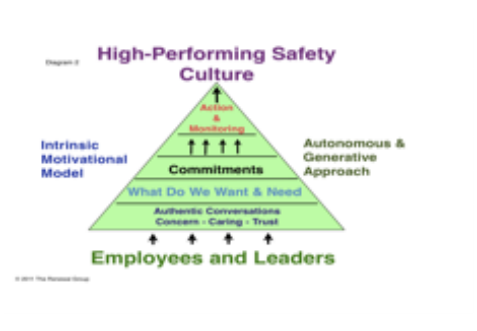
That evening, I reflected again on the special opportunity I had to join in on these insightful and inspiring discussions. It became clear that what I teach and facilitate is what this group had intuitively and experientially put into practice. Their culture is infused with intrinsic motivation. They are motivated from the inside out. No one is dangling carrots or rewards or threatening them with consequences if they don’t act responsibly. They act safely and responsibly because it matters to them, and they take ownership and pride in it.

Self-Determination Theory informs us that if people are given or find a sense of purpose in what they do; if they are given the resources, permission and support to have autonomy in making decisions; the encouragement and opportunity to develop relationships with each other and their managers; and the ability to influence the things that matter most to them—they will not only achieve, they will thrive.

This team thrives in a very difficult environment. They do hard and dangerous work. Their success can be framed in a theoretical model, but what is most impressive is their commitment to make it stick—they are the glue.  


© Tom Wojick, The Renewal Group, September 2012


Picture
I’m sure you’re aware of what a credit rating is—also referred to as a score. It’s the number that gets assigned to you by institutions that collect data about your money handling behavior. And that number can be the deciding factor in many life decisions, such as purchasing a car or a home, and in some cases even getting hired.

Unfortunately, many people go about life not knowing their credit score until the moment they’ve made a big decision—only to shockingly find out their credit rating is not high enough to get approved for what they want. Does this sound familiar? It’s never a pleasant experience to be told you are not credit worthy.

Once the shock, disappointment and maybe anger subsides, you might start racking your brain trying to figure out what the heck is in that report thwarting you from getting what you want.  Trying to find the answer can be just as unpleasant as receiving the rejection.

Before long, it begins to sink in that information about how you live your life is constantly being monitored and evaluated by unknown people in unknown organizations in the most dispassionate way. Even more disturbing is that you may find out that the information is inaccurate. It can make you feel helpless and powerless.

In some aspects, your credit rating is similar to your credibility rating. But in other respects, your credibility rating is far more important because it impacts the most valuable asset you have—TRUST. Everything in life revolves around this powerful emotion. It can disrupt global financial systems and ruin a valued relationship. And once it’s lost, the ability to recover and regain one’s credibility is less than assured. Forget about buying it back—even if your credit rating is excellent, trust is never for sale.

Yet everyday we take risks with our credibility rating by not paying attention to our words and deeds. Just like the credit rating agencies, every day people observe and experience what we do and how we do it and make decisions based on how well our words and actions are aligned with the values we espouse as well as a set of commonly held values: respect, compassion, honesty, responsibility, and fairness. These moments of credibility are not stored in a dispassionate computer in some unknown location—they are stored in the hearts and minds of the people we interact with and have relationships with. They become our relationship capital. Eventually, these credibility data points accumulate to the extent that our credibility will be damaged or lost, or if we’re lucky, honored with a seal of trustworthiness.

Life is difficult enough without having to live without credibility. Imagine going through an entire day knowing everyone you encounter questions or is suspicious of your motives, your sincerity, your honesty, and your fairness.

No matter what position(s) or title(s) you hold in life—father, mother, supervisor, leader, or teacher—your credibility rating is paramount. Without relationship capital and without trust, you cannot influence, you cannot lead, and your most important wants and desires are at risk of being unfulfilled.

Don’t wait to find out your rating. Start today by asking, “Am I walking my talk? What I say and do—are these things in alignment with my stated values? Do they portray a sense of respect, caring, honesty, and fairness?”

Connect with people you know and trust and ask for their honest assessment. Asking for feedback is a courageous activity. Once your strength and confidence grows, extend your feedback process and circle with colleagues and employees. Whatever feedback you get about your credibility rating is a gift. Because now you know your “score”—and you won’t be shocked and rejected later when it matters most.


We’ve all been there: in a discussion, meeting or presentation when someone interjects, causing a disruption in the flow of your thoughts or agenda. How do you respond? Most likely, you’ll be energized by whatever emotion(s) the moment elicits in you. But what will be the consequences if you allow the energy from that emotion to hijack you? Will your reaction be aligned with your organizational vision, your personal purpose and values? Will it convey to others the type of friend, parent, spouse, or leader you want to be? What will it mean for your future?

In his blog, Do You Know What You Are Feeling?, Peter Bregman shares a couple of similar experiences in which his emotional energy nearly hijacked his responses. These oftentimes overwhelming, stimuli-induced situations occur multiple times every day, particularly in our fast-paced and stressful lives. And while we may be inclined to believe these small situational events have little consequence, we can see from his article that how we respond to them makes all the difference: harnessing our energy and emotions can be a moment that deepens our insight and growth and strengthens our relationships, but letting it get the best of us can have negative consequences that are equally far-reaching.

Peter relates how he decided to sit on a feeling rather than react to it: "But I didn't do anything right away. And, as I sat with the feeling, I realized that while I felt a jumble of emotions, mostly I felt hurt and untrusted." In the midst of a personal issue, his decision to sit was critical for him and his protagonist. By tolerating his emotions and allowing himself to explore what they were urging him to do, he was able to regain emotional balance and perspective and make a wise choice.

Learning to tolerate emotions may seem like the old Western method of tolerating pain by biting on a bullet, but once we understand and trust that by tolerating and exploring our emotions we gain insight and wisdom, this allows us the chance to make decisions that create positive outcomes.

A simple and very effective tool to assist in tolerating emotions is called VET: Validate, Explore and Transform. First, identify what you are feeling and accept that you are experiencing this emotion. Once you validate, you can be begin to explore the emotion and discover its purpose. In this process, you may learn that your initial feeling was not your true feeling. In Peter’s example, he found that his anger was really stemming from feeling hurt.

Once you validate and explore you are now poised to transform your feelings and the outcome of the situation. Instead of sulking or lashing out, Peter wrote an email to the person who stimulated his feelings of hurt and was surprised when "she sent me a wonderful email back, acknowledging her mistake and thanking me for my willingness to let her know when she missed the mark." If he had let anger dictate his behavior, the outcome would have been much different for both .

Emotions are chemical messengers sent to inform us and to move us. Tolerating that first barrage of chemicals is key to finding insight into the situation that activated our emotional system, which will then help us make better decisions. There is a quote by Albert Camus that goes, “Life is the sum of all your choices.” Making the most of these everyday decisions is the difference in living a life filled with regrets or a life fulfilled. And tolerating our emotions is critical in these decision points.

Thank you Peter Bregman for sharing your personal experiences.


   I have a theory about values, leadership, and workforce engagement that is related to a study I read on brain imagining and sacred values. The study, titled, The Price of Your Soul: Neural evidence for the non-utilitarian representation of sacred values,” was conducted by Gregory Burns, PhD, Director of the Center for Neuropolicy at Emory University. Through the study Burns found that “sacred values prompt greater activation of an area of the brain associated with rules-based, right-or-wrong thought processes as opposed to the regions linked to processing of costs-versus-benefits."  

The study gave participants an option to disavow any of their personal value statements for money. Disavowing a statement meant they could receive as much as $100 by simply agreeing to sign a document stating the opposite of what they said they believed.  The disavowing was interpreted as the value statement not being sacred to the person. Statements that the participants refused to disavow were classified as being personally sacred.   
Brain imaging indicated that scared and non-sacred values activated different areas of the brain. The scared values activated areas associated with right and wrong and the non-sacred values activated areas related to pleasure and rewards. In addition, the researchers found that the amygdala region became activated when a person’s sacred values were challenged.  

The amygdala is the part of the brain that controls our “911” stress alert reactions of fight, flee or freeze when it perceives a threat to our well-being. It is also associated with our emotions, particularly emotions connected to perceived negative experiences, which over time creates a filing cabinet of negative memories. In our modern world people usually don’t react physically by fighting or fleeing, they react emotionally. We fight by arguing or being stubborn; we flee by disengagingmentally and emotionally, which lessens commitment; and we freeze by shutting down our creativity. It is emotional reactions like these with which a leader must contend. Therefore, developing one’s emotional intelligence is critical to effectively counter and minimize these stress responses. Organizations would be wise to establish emotional intelligence as a leadership prerequisite if they want to reap the benefit from higher levels of workforce engagement

   I believe that workforce engagement issues are a result of leaders and organizations not operating from a foundation of sacred values. The Institute for Global Ethics did exhaustive surveying and research in an attempt to identify what core moral and ethical values were held in highest regard by people and communities throughout the world. No matter where they went, they found the same answers: honesty, responsibility, respect, fairness, and compassion. In essence, these are core sacred values.

Applying the brain imaging research from the sacred values study, it would seem that if any of these five core values were in essence disavowed by anyone – in this instance,  a leader – it would activate the “right and wrong” areas in the brains of his or her employees and at the same time activate their amygdale, putting each into either a fight, freeze or flee state of reaction. The result could be a strong feeling on part of an employee to not trust this person and to feel that they have been “wronged,” both of which will negatively impact engagement, commitment, performance, and most importantly, trust.  

Values authenticity is the core issue. Leaders and organizations who – within their heart, head, and gut – are not authentically aligned and committed to these core sacred values will never be able to fully capture the hearts and minds of their workforce nor their stakeholders.  

The Gallup Organization, which has made a science of employee engagement, reported that in the third quarter of 2011,Seventy-one percent of American workers are ‘not engaged’ or ‘actively disengaged’ in their work, meaning they are emotionally disconnected from their workplaces and are less likely to be productive.” This means that 71% of the country’s workforce is emotionally reacting by fighting, fleeing or freezing.Why? Because they believe that their sacred values are absent or being disavowed. A leader cannot drive workforce engagement if he or she does not authentically hold these five core values as sacred.  

When I’ve had the opportunity to talk, or should I say listen, to employees, these five values are at the core of their concerns and issues, and are the crux of their disengagement:  
  •  “I can’t trust what my boss tells me.” (Honesty)
  • “They don’t care about how these changes are going to impact my family.” (Compassion)
  • “They said they would take care of this issue months ago, but as you can see nothing has changed.” (Responsibility)
  •  “Our benefits have been slashed. They even took away our break time, but the executives are still driving a company car.” (Fairness)
  •  “What really galls me is that they didn’t even tell us about these changes face to face. We got it in an email.” (Respect)  
 When a leader, or any person for that matter, applies a cost versus benefit assessment to a situation, without regard and consideration of these sacred values, they will run the risk of their decision meeting stiff resistance. The consequences of taking these risks are varied, but one thing for sure is that the integrity of that relationship will be damaged and regaining that level of integrity again will be extremely difficult.  

These same sacred values are at the heart of the issues that are polarizing and creating conflict in this country and around the world and thwarting people from finding solutions to their most pressing problems: 
  • Income inequality (Fairness, Compassion)
  • Foreclosures (Responsibility, Fairness)
  • Government (Honesty, Responsibility, Fairness)
  • Politics (Respect)
  • Healthcare and Social Policy (Compassion, Responsibility)   
  In some situations a leaders’ inauthentic behavior is unintended due to a lack of sensitivity and awareness, but in many cases leaders willfully choose to disavow sacred values because they value the reward more (bonuses). These value lapses – intended or unintended – have led to the rise of the Occupy Wall Street Movement and to the overthrow of regimes in the Middle East. People need and must feel that their leaders hold these five scared values authentically, not superficially, or else they will disengage and react by fighting, fleeing or freezing. And as tensions increase due the real and perceived disavowal of these sacred values, the potential for humans to react physically as well as emotionally also rises, as we’ve seen throughout the Middle East.

    Leaders from all sectors of our society must develop a deeper understanding and sensitivity of how these core sacred values dynamically hold relationships, teams, organizations, and countries together, all be it sometimes in a chaotic way. When organizational and political leaders focus on and subscribe to the perspective of cost versus benefit, there undoubtedly will be tension and that tension will give rise to conflict and disengagement.

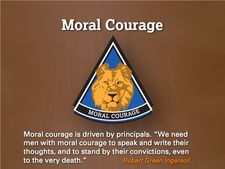
In his book Moral Courage, Rushworth Kidder states, “Successful organizations must require moral courage in their leaders and then work assiduously that it is rarely needed.” I agree, but more importantly leaders must take on the hard work – the work of authentically committing to these sacred core values and then modeling moral courage when they are challenged. To create a highly engaged workforce leaders and organizations would be better served to first look in-ward and to evaluate the depth of their commitment to these core sacred values.  
    
Authenticity and Moral Courage are two of the Seven Hallmarks of Relationship–Centered Leadership. If you have an interest in building workforce engagement and becoming a high-performing leader, we invite you to explore the Relationship–Centered Leadership program.  For more information on this program download a description from the Free Downloads tab
 
 
Flying Against the Winds of Science – Culture versus Strategy
Why Southwest's Culture eats USAIRWAY's Strategy

I’ve been doing considerable research and development of programs for workforce motivation, engagement and the role of incentives and rewards in building a culture of performance. What I have discovered is that incentives and rewards are primitive tools of the 20th century carrot and stick approach to motivating employees  performance, and at best they only affect short-term results and come with great risk.

With this in mind I was fascinated to find two articles about separate companies exemplifying and employing the best and worst forms of employee motivation. The first company is one operating in the 21st century but still mired in 20th century beliefs about motivation and utilizing 20th century tools to accomplish its mission. The second has a record of consistent excellence in operating performance and employee and customer satisfaction for more than 20 years, with a focus on building and sustaining a high performing culture by utilizing a proven model of motivation that taps into the intrinsic desires of employees and customers.

My interest was piqued not just because of the content of the articles; I was also interested because I am a customer of both organizations and have a personal understanding of how their approaches to workforce motivation impact my experience. And I can attest that there is a significant difference.

The two companies are USAir Ways (USAir) and Southwest Airlines. I am a frequent customer of USAir – in fact, I just achieved Platinum status in their air miles program – and am an occasional user of Southwest. This is only because USAir provides better routes to my most frequent destinations. Therefore I use them out of convenience, not preference.

On one particular trip I wanted to make an intermediate stop before heading to my final destination. I chose Southwest on this occasion because it had a better schedule at similar rates. The hotel I was staying at provided me a complementary copy of USA Today, which I decided would make good reading on the plane. As I was scanning the headlines, one in particular caught my eye: “US Airways makes progress.” It chronicled how the company found itself ranked low on many indicators of passenger satisfaction, such as baggage handling, and how it recently achieved top ratings compared to other “legacy carriers,” which Southwest is not. The article stated that the company had to dramatically boost performance and one key initiative it instituted to aid in this was an incentive program called Triple Play Bucks, which pays employees when the company achieves top billing in a number of categories. It went on to say that employees have received $350.00 each this year for a total of 13.1 million dollars distributed to employees.

 The second article, “Gary’s Greeting,” by Southwest’s CEO Gary Kelly, which appeared in the airline’s Spirit magazine, discussed the importance of corporate culture and how the company has worked diligently to keep it vibrant for more than 20 years. Kelly stated, “Your business plan is what you are, but culture is who you are,” and the article noted the significance of Southwest’s Culture Committee, which consists of employees from each major work location meeting quarterly to share ideas on how to keep their culture vibrant, meaningful and strong. The article highlighted the three qualities that define their culture: “A Warrior Spirit,” “A Servant’s Heart” and “A FunLUVing Attitude.”

  A statement from Southwest’s investor relations web page notes, “Southwest is one of the most honored airlines in the world known for its commitment to the triple bottom line of Performance, People and Planet.” One could be skeptical and say this is a heap of self-promotion. However, Southwest was honored by receiving an Employees’ Choice Award as one of the top 50 best places to work in 2012 – an award 150,000 companies competed for, all rated and ranked by their employees. Southwest came in 17th and the competition included companies such Google, Facebook, Nike, and Starbucks. No other airline was ranked in the top 50.   Both airlines have accomplished a lot, however it appears USAir is still trapped in 20th century thinking and strategy about motivation. I am making this assertion because of the use of the Triple Pay Bucks, which is a purely extrinsic, carrot and stick tool to buy performance. This ploy is fraught with risks and is difficult to sustain. When will employees begin to complain that $350.00 isn’t enough to behave in a manner that endears customers? Will USAir be willing to up the ante if necessary? What if oil spikes because of a world crisis and the company feels the need to cut costs? These are a few of the pitfalls for pay-for-performance schemes. I have had firsthand experience working with a company that compensated employees to serve on a committee to provide an important internal service in the organization, and when the organization made a decision to reduce compensation they lost members and now cannot recruit new ones. There is another factor to consider that is identified in numerous employee engagement surveys: employees who work hard eventually come to resent co-workers and the company as a whole when slackers receive the same rewards.   What is most troublesome about USAir’s strategy is that since the 1970s this type of extrinsic motivation program has been proven to be a failure. One of the pioneers in researching human and organizational motivation is Edward Deci, Ph.D Professor of Psychology at the University of Rochester. In this quote from his book Why We Do What We Do, he succinctly articulates the core issue: “When people say that money motivates, what they really mean is that money controls. And when it does, people become alienated – they give up some of their authenticity –and they push themselves to do what they think they must do. One take on the meaning of alienation is that it begins as people lose touch with their intrinsic motivation, with the vitality and excitement that all children have.” Daniel Pink, in his book Drive, states, “The problem is that most businesses haven’t caught up to this understanding of what motivates us. Too many organizations – not just companies, but governments and non-profits as well – still operate from assumptions about human potential and individual performance that are outdated, unexamined, and rooted more in folklore than science. They continue to pursue practices such as short-term incentive plans and pay-for-performance schemes in the face of mounting evidence that such measure usually don’t work and often do harm.”

As many companies do, USAir took the easy way to achieve a strategy, possibly not realizing or caring about building a positive, high-performing company culture for the long term. A familiar quote goes, “Culture eats strategy for lunch,” to which I can’t help but add, “There are no free lunches.” The opportunity to build a service culture may have been lost for USAir; surely they’ve lost the opportunity to ignite the intrinsic motivation waiting to be released in their employees.

It is also important to note that for some employees, programs like Triple Pay Bucks can be perceived as an insult, because it insinuates a lack of respect, concern and personal pride that they take in their job – something that management assumes they can stimulate with the metaphorical dangling carrot.

Alternately, I must share one example of how I experienced Southwest’s spirited, heartened and fun-loving culture. On a 45-minute flight (air time), Southwest’s flight attendants started to take drink orders as the flight was taxiing. Once the plane reached a safe altitude they put a drink and a bag of peanuts in every passenger’s hand and did so with a smile. On a recent USAir flight of the same duration, as well as same route, a flight attendant announced after takeoff that there would be no beverage service because of the short duration. That is the absence of any kind of spirit and no amount of Triple Pay Bucks will instill it.

I will continue to fly USAir because it is convenient. I don’t have high expectations; therefore I only occasionally get upset at the absence of service and caring.  I look forward to opportunities when I can fly Southwest and experience what it is like to be a customer taken care of by genuinely happy, motivated employees.

The Renewal Group has developed programs to assist companies in developing high-performance cultures by awakening, inspiring and empowering intrinsic motivation and human potential. Our Partners in Safety Program demonstrates how companies by utilizing intrinsic motivation concepts and tools can build high-performing safety cultures within their organizations and The Edge Program provides leaders and managers with the concepts and tools to unleash intrinsic motivation in their employees and our Relationship - Centered Leadership program assists leaders in developing the Seven Hallmarks of Leadership that build their power to inspire and influence employee engagement.

Postscript: On a later flight on USAir I met a flight attendant who makes a difference not because of triple bucks, but because he is intrinsically motivated. I'll share this story on a blog soon to be posted


_ This Mom-ism was almost as regular as her apple pies. I loved my Mom’s apple pies; all that cinnamon and crust made with lard! And I have another memory of her: when she would admonish my sister and me the moment we would start talking unkindly about a neighbor or schoolmate. “If you can’t say something nice, then don’t say anything at all!” That would always shut us up fast. It’s too bad she couldn’t have been on my last business trip – maybe she could have put stop to all the trashing and bashing that was taking place.

I began to notice it while working out in the hotel gym. A woman next to me was high-stepping on an elliptical machine and at the same time trashing and bashing her colleagues to someone on her cell phone. At first I was annoyed at the incessant talking – then I began to notice the tone and content. “She’s nothing but trouble. I’m so tired of her expressing her opinions.” After 30 minutes of this continuous trashing I wanted to start singing “Jingle Bells” as loudly as I could in hopes that she would get the point and quit her conversation. After 40 minutes, I simply gave up and left. Had my Mom been there, she would have put her hand up, motioned to the women to stop, and reminded her, “If you can’t say something nice, then don’t say anything at all.”

The next morning while waiting for my 6 am flight I was sitting a few seats away from two copy machine salesmen who were trashing and bashing a customer for wanting too much information and not being able to make up his mind. I could not wait to get on the plane and escape this early morning negative stuff. I’m addicted to caffeine in the morning, but these guys seemed to need a good dose of negativity to get them going.

At that point I thought I had escaped the negative white noise. After being upgraded to first class I had visions of reading for a few moments and then retreating into my introverted space until I arrived at my next stop. That bubble burst when two gentlemen behind me felt the need to discuss their perfections and the imperfections and inferiority of their boss and company. I couldn’t help but wonder where my Mom was then.

I won’t continue this saga, but I will let you know that it followed me all the way home, which caused me to reflect. Am I this negative and just don’t notice it? Do I live by Mom’s words? Why do we dwell and focus on negativity, weaknesses and mistakes? Are we even conscious of this focus or has it simply become human nature? And there was one more question that really bothered me: have we lost all boundaries of what should be public and private discourse as well as a sense of place and time for these discussions? Has reality TV, YouTube and social networking so blurred the lines of what is personal and professional and private and public that we now accept and treat public space as a stage on which to share how much better we are than all those other people with whom we live and work?

It occurred to me that American businesses must be suffering through a crisis of incompetence. If all the people being bashed are as inept as their antagonists claimed, our economy is surely in for another shock.

I sensed that the people who were trashing and bashing got a boost of self-esteem from it yet were oblivious to the implications their behavior made about their own character and trustworthiness. Maybe the need to belong is so overwhelming these days that most of us would rather make disparaging remarks about others than take a stand and be heroic and positive. Frankly, we see this in bullying. In most bullying situations you have a “bully,” a victim, and the bully’s cohorts who stand by allowing the trashing and bashing but not actively participating, giving the perception of passive support.  The fear of being ostracized has seemingly replaced our primal fear of Saber Tooth Tigers out looking to make a snack of us. 

A common theme that ran through all of the conversations was self-interest and self-promotion. Had the salesmen taken the time to understand why their client was reluctant to buy their product, they might have had a more fruitful and hopeful meeting. If the woman on the elliptical trainer could step out of her fear of not belonging and frame the other woman’s behavior as being concerned, curious and wanting clarity, she might have an appreciation for her rather than an annoyance with her. And if the two perfect beings unable to find one positive trait in their boss and organization could reflect on the fact that both were selected and still employed by these inferior beings, they might, just might, find a way to be thankful and contribute to finding solutions to their complaints. 

One reason for these actions, based on human behavior and biology, jumps out at me: stress. There’s little doubt that the past decade has been stressful and the current economic and political climate continues to foment increasing high levels of stress and create we vs. they worldviews. By allowing ourselves to be overwhelmed with this stress, our natural focus is on survival. We may even picture ourselves on a metaphorical Survivor Island, so we plot, connive, lie, and trash and bash our way to being the survivor. What we lose in the process is exactly what we want and need: respect, belongingness, self-worth, and a network of friends and colleagues willing to stand by us and offer assistance. 

The answer to putting a stop to and reversing this destructive behavior could be as simple as my Mom says: “If you can’t say something nice, then don’t say anything at all.” I don’t mean to make light of this, because it does concern me and it should concern you for no other reason than the realization that the probability that someone is at this moment trashing and bashing you and your organization is greater than you think.

Trashing and bashing behavior is a cancer for teams and organizational performance and although our reptile brain says, “Attach or be eaten,” our chances for survival are actually increased by our ability and willingness to care for one other.

There are tools and concepts to help individuals and organizations learn how to stop and reverse this negative approach that is taking over and begin to reap the benefits of caring, focusing on strengths and transforming perceived weaknesses and problems into solutions:
  • Positive Psychology
  • Emotional Intelligence
  • Resiliency
  • Appreciative inquiry
  • Authentic and Generative Leadership
  • Generative Foundations of Actions in Organizations and the
  • Strengths based work of Marcus Buckingham and others
The films, Seeing Red Cars by Laura Goodrich and Celebrate What’s Right with the World by Dewitt Jones, show us the power of a worldview that is optimistic, positive, appreciative, and strengths-based can have on individuals and organizations.

To break the habit of trashing and bashing is hard work. The easy path is to find fault and focus on weaknesses instead of courageously finding the strengths in people and the opportunity and potential in difficult situations. It’s easy to jump on the negative bandwagon. But be careful – from what I see, it is already full. Take a different path and resist veering off into the negative – take a few moments and ask yourself, “Is this what I want and how I want to be seen and remembered?” Could you rest in peace with an epitaph that read, “Always ready with a disparaging word and never missed an opportunity to trash and bash even his best friends”?

None of us want to be seen or remembered for this destructive and bullying behavior. And it’s time for us to make a commitment to not participate in it actively of passively in either our personal or professional lives. There are many options that we can employ and they all begin with a decision to take a stand. In the end, you will appreciate yourself more for it and find that you have less stress and that people will enjoy and benefit from having a relationship with you.


One of my favorite sections of the New York Times Sunday edition is called the, Corner Office.  Each week they interview a business leader to share their insights on leadership. This particular interview started with the following question, “Do you have the equivalent of a first day speech you use in new jobs?” The leader concluded her response with, “My door is always open.” 

When I hear this, I can’t help but think of Ronald Reagan’s famous line, in a 1980 debate with Jimmy Carter, “Governor, there you go again.” How many times have you heard an executive proclaim, “My door is always open”? This declaration of openness must be one of the 10 commandments they teach in leadership school,  Thou shall have an open door policy. But what they fail to mention is just how poorly it works and what an unfair burden it places on employees.

I must admit I have used this slogan a number of times; maybe you have also. What I want to know is, has it ever actually prompted you to walk up to the boss’s office and wait for the door to open so you can share your deepest concerns with the boss about how the company is killing your motivation and that of your co-workers?  My guess is no. Personally, I can only remember two occasions when a employee even asked for an appointment to meet with me, never mind just showing up at my office door.

Why? Because employees do not  trust and believe in stereotypical “I want to know what’s on your mind” leader-jargon. While this is not to say some leaders are not sincere in wanting to have meaningful conversations with their employees and believe that it is important to do so, it is important they not delude themselves into thinking an “open door policy” is the way to achieve this objective.

The reality is that the road from the shop floor to the boss’s office is a gauntlet of pot holes, U-turns, Stop signs, and a host of scowling people with fingers pointing at employees to turn back. Most doors are figuratively and literally closed no matter how often a leader proclaims, “My door is always open.”  As Daniel Goleman in his book Primal Leadership, states, “It may take a small act of courage to confront the boss with bad news about the company, but you have to be even braver to let the boss know he’s out of touch with how people are feeling, or that his ‘inspiring’ talks fall flat.” 

It’s Not Their Job – It’s Yours

It’s not their job to come to you – it’s your job to go to your employees. It not about open doors; it’s about open walls. If leaders need a metaphor, it’s an “office without walls,” and you create this by going down on the shop floor and making yourself available to your employees. Take time to sit in their “office” and just maybe they will start to believe and trust that you really do want to know what’s on their mind.

I can’t say it any better than Frank Sinatra, “Wake up to reality”, a lyric from one of my favorite songs, I’ve Got You Under My Skin. Study after study and survey upon survey confirms that over 60% of employees are disengaged. This means they are not committed to giving their best. To put it bluntly, you are paying them and not getting a fair return on your investment. However, if you are still hardwired to believe that people’s primary motivation to work is only for money, then I want to say, “Wake up to reality.” Consider this statement from an extensive Global Workforce Engagement Survey:

“Employees must trust in your ability and character -- and understand your personal motivation. You won’t be able to match individual passion and proficiencies with organizational priorities if you don’t talk with your people. Get to know them. Understand not only their special talents but also their unique engagement drivers.”

You cannot get to know your employees and they will not understand you nor trust your character and motivation by proclaiming, “I have an open door policy.”  The reason is simple; they will not show up. If, as Goleman states, it takes bravery and courage to give a leader feedback, it takes even more courage to do it in his or her office.

It takes courage for a leader to actively expose themselves on the battlefields of their organization, but that is exactly what employees expect of leaders; to model bravery.   Leaders must lead by example. If you truly want employees to have confidence in you and you believe that their work experience is a critical factor in the productivity and success of your organization, consider these recommendations:

  •   Start the New Year by closing your office door as you walk out to engage your employees. Let them know that you are building an office without walls in attitude and actions. Schedule regular “open office visits on their turf” as well as spontaneous visits to your employees’ “offices”.
  •   Don’t preach the corporate gospel – Listen, Listen and Listen. Here are a couple of questions to get the conversation started:
  •     If I were able to change two things in the way I work with you, what two things would create the most value and benefit for you?
  • ·    If I could change or remove something that interferes or prevents you from performing at your best, what two things would be the most important to you?
  •   Don’t make excuses or false promises and don’t feel that you need to have an answer. What they want most is for you to listen, understand and reflect, and to take action that is in the best interest of both the company and your employees.
  •   Engage your managers and supervisors in the process. They are the ones who must model the  “office without walls” attitude and actions every day. You might want to start with your managers first and schedule a few individual and group meetings, remembering that they might be just as reluctant to give you the unvarnished feedback you need.
  • Keep everyone informed. Make sure you create a feedback loop so that employees and managers are kept abreast of all decisions, actions and commitments. If something can’t be accomplished, explain the reasons why. Your employees may not like the decision, but they will develop respect for you, which in time will help to build the kind of trust you are want and need. 
  An Office Without Walls: The following is an except from an article,
The Best Advice I Ever Got, by Michelle Peluso, President and CEO of Travelocity, that appeared in the, Harvard Business Review, October 2008 issue. I think it describes the spirit as well as the examples of what I refer to as An Office Without Walls:
"At a 5,000-person global organization, I simply can't know everyone personally. But I can apply my dad's techniques in a scaled-up way that lets me know as many people as possible, that encourages managers to do the same, and that makes our employees generally feel that this is a place where someone's looking out for them. I often visit our different offices; I hold brown-bag lunches every week; I regularly e-mail the whole staff about what's going well and what needs to improve; I hold quarterly talent management sessions with my direct reports; and I constantly walk the halls. When anyone at Travelocity e-mails me, I respond within 24 hours. I read every single word of our annual employee survey results and of my managers' 360-degree performance feedback - and I rate those managers in large part on how well they know and lead their own people."


Picture
 Partners in Safety

Ever since the industrial revolution there has been a consistent history of workplace accidents and injuries. Recently there have been tragic and catastrophic accidents within the mining and oil industries, which have cost billions and the loss of many lives. Although there have been significant improvements in workplace safety brought about by regulation, the technology, improved processes and organizational commitment needed to improve worker safety, accidents and injuries remains a significant problem and business risk.

Still, no amount of regulations, oversight, education and organizational commitment will eliminate workplace accidents and injuries. To believe so is misguided.

As long as a human being is directly or indirectly involved in a work process, there will be accidents and injuries. However, this does not have to be an unpredictable, mysterious or acceptable reality of doing business. Beliefs about human motivation – and the workplace models and approaches that have been used since Henry Ford produced the first model T – do not address the human factor, nor do they improve how people perform.  The reasons are clear and are backed by extensive research. Theory X and the “carrots and sticks” and reward and punishment approaches may produce short-term improvements, but in the long term they stifle motivation and engagement and contribute to people making unwise decisions.

The question must be asked, “Why, when the personal and organizational stakes are so high, do we choose to rely on motivational approaches and systems that produce minimum levels of compliance and contribute to worker disinterest and defiance?   

The Partners In Safety Program is a solution. It is based on models of change and motivation that have been validated by years of research and demonstrated effectiveness in creating and sustaining organizational cultures that motivate and engage employees in achieving and exceeding organizational goals; safety being priority one.
Down load the entire overview under our Free Downloads tab: